
Here is a three-hour talk on quantum computing and quantum theory reality and hype.
Scott Aaronson is a professor of computer science at University of Texas at Austin and director of its Quantum Information Center. Previously he received his PhD at UC Berkeley and was a faculty member at MIT in Electrical Engineering and Computer Science from 2007-2016. Scott has won numerous prizes for his research on quantum computing and complexity theory, including the Alan T Waterman award in 2012 and the ACM Prize in Computing in 2020. In addition to being a world class scientist, Scott is famous for his highly informative and entertaining blog Schtetl Optimized, which has kept the scientific community up to date on quantum hype for nearly the past two decades.
In this episode, Scott Aaronson gives a crash course on quantum computing, diving deep into the details, offering insights, and clarifying misconceptions surrounding quantum hype.
NOTE: back over a decade ago, Scott Aaronson predicted that DWave Systems adiabatic quantum computers would not be more useful than a ham sandwitch. I predicted in 2006 that before the end of 2010 that DWave would have a commercial sale with a system with over 100 qubits. DWave Systems did have a multi-million sale to Lockheed late in 2010. This just shows that scientific experts may not be the best predicting what will happen. The DWave systems are being used to explore complex problems and did scale to 5000+ adiabatic qubits. Scott Aaronson has been involved advising many quantum computer companies so he is very familiar with the work being done currently.
260 pages of course notes from Scott Aaronson’s class on quantum computing.
Part I. Introduction (Personal) 00:00 : Biography 01:02 : Shtetl Optimized and the ways of blogging 09:56 : Sabattical at OpenAI, AI safety, machine learning 10:54 : “I study what we can’t do with computers we don’t have”
Part II. Introduction (Technical) 22:57 : Overview 24:13 : SMBC Cartoon: “The Talk”. Summary of misconceptions of the field 33:09 : How all quantum algorithms work: choreograph pattern of interference 34:38 : Outline
Part III. Setup 36:10 : Review of classical bits 40:46 : Tensor product and computational basis 42:07 : Entanglement 44:25 : What is not spooky action at a distance 46:15 : Definition of qubit 48:10 : bra and ket notation 50:48 : Superposition example 52:41: Measurement, Copenhagen interpretation
Part IV. Working with Qubits 57:02 : Unitary operators, quantum gates 59:03 : Hadamard gate 1:03:34 : Philosophical aside: How to “store” 2^1000 bits of information. 1:08:34 : CNOT operation 1:09:45 : Quantum circuits 1:12:43 : Circuit notation, XOR notation 1:14:55 : Subtlety on preparing quantum states 1:16:32 : Building and decomposing general quantum circuits: Universality 1:21:30 : Complexity of circuits vs algorithms 1:28:45 : How quantum algorithms are physically implemented 1:31:55 : Equivalence to quantum Turing Machine
Part V. Quantum Speedup 1:35:48 : Query complexity (black box / oracle model) 1:39:03 : Objection: how is quantum querying not cheating? 1:42:51 : Defining a quantum black box 1:45:30 : Efficient classical f yields efficient U_f 1:47:26 : Toffoli gate 1:50:07 : Garbage and quantum uncomputing 1:54:45 : Implementing (-1)^f(x)) 1:57:54 : Deutsch-Jozsa algorithm: Where quantum beats classical 2:07:08 : The point: constructive and destructive interference
Part VI. Complexity Classes 2:08:41 : Recap. History of Simon’s and Shor’s Algorithm. 2:14:42 : BQP 2:18:18 : EQP 2:20:50 : P 2:22:28 : NP 2:26:10 : P vs NP and NP-completeness 2:33:48 : P vs BQP 2:40:48 : NP vs BQP 2:41:23 : Where quantum computing explanations go off the rails
Part VII. Quantum Supremacy 2:43:46 : Scalable quantum computing 2:47:43 : Quantum supremacy 2:51:37 : Boson sampling 2:52:03 : What Google did and the difficulties with evaluating supremacy 3:04:22 : Huge open question
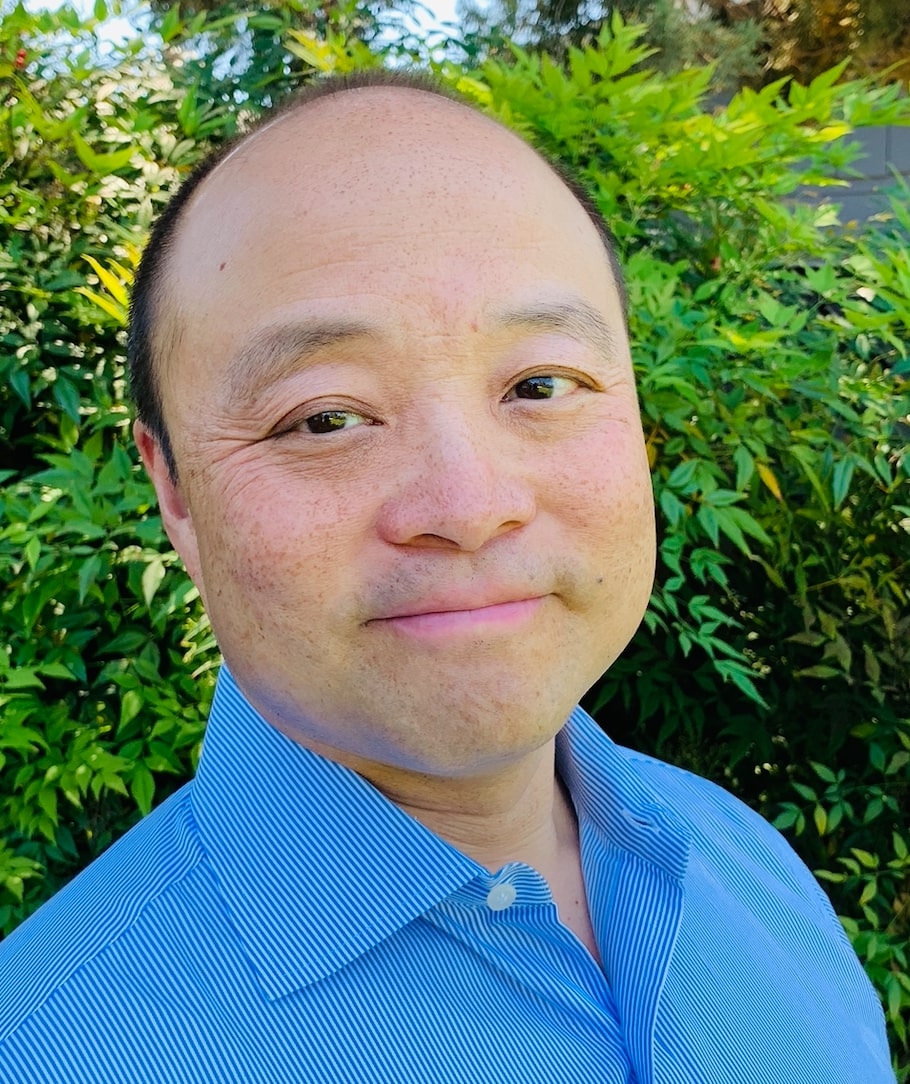
Brian Wang is a Futurist Thought Leader and a popular Science blogger with 1 million readers per month. His blog Nextbigfuture.com is ranked #1 Science News Blog. It covers many disruptive technology and trends including Space, Robotics, Artificial Intelligence, Medicine, Anti-aging Biotechnology, and Nanotechnology.
Known for identifying cutting edge technologies, he is currently a Co-Founder of a startup and fundraiser for high potential early-stage companies. He is the Head of Research for Allocations for deep technology investments and an Angel Investor at Space Angels.
A frequent speaker at corporations, he has been a TEDx speaker, a Singularity University speaker and guest at numerous interviews for radio and podcasts. He is open to public speaking and advising engagements.
